Why do foreign investors and EPC contractors subcontract electrical works in Turkey to a local contractor?
Foreign investors and EPC contractors subcontract electrical works in Turkey to a local contractor because design approval, correspondence with the distribution company (DSO) and TEİAŞ (TEIAS), the transmission system operator, the acceptance file and the rules for qualified site personnel all run on Turkish regulations and Turkish-language procedures. Even when the design, the main equipment and the financing come from abroad, some roles have to be filled in Turkey: the engineer who signs the measurement reports, the team that walks the acceptance committee through the plant and the qualified electricians on site.
The usual set-up looks like this: the investor forms a Turkish project company, and the EPC main contractor keeps engineering, procurement and overall coordination. The site electrical package (MV and LV cabling, transformer and switchgear installation, earthing, testing and commissioning) goes to a local subcontractor. In this model the subcontractor is more than a labour provider; it is the technical counterpart that bridges Turkish regulations and the international project documentation. Our article on turnkey electrical contracting shows how this single point of contact works on site.
This guide covers the working model, regulations, interfaces and imported-equipment compliance. The same topics also make good criteria when you choose a subcontractor: regulatory knowledge, interface discipline, document control and the ability to mobilize in several regions at once.
Which regulations govern electrical installations in Turkey, and how do they relate to IEC standards?
Electrical installations in Turkey are governed by regulations of the Ministry of Energy and Natural Resources and the Energy Market Regulatory Authority (EPDK), together with Turkish Standards (TS). Most of these standards are adopted from IEC and EN standards as TS EN or TS EN IEC. On site, the texts that matter most are the Regulation on Heavy Current Electrical Installations, the Regulation on Grounding in Electrical Installations, the Regulation on Electrical Installation Projects and, at handover, the Regulation on Acceptance of Electricity Generation and Electricity Storage Facilities. Grid connection falls under the Electricity Market Connection and System Use Regulation and the Electricity Grid Code.
A design built to IEC can usually be aligned with Turkish rules, but not automatically. Earthing design with step and touch voltage assessment, safety clearances, cable laying details, labelling and acceptance tests carry specific Turkish requirements, and the DSO's technical specifications apply on top of them.
The practical answer is a compliance gap list prepared at project start, comparing the EPC's specification with Turkish requirements line by line. A mismatch found later usually surfaces at acceptance, the most expensive point to find it. Our Technical Specifications service reviews existing specifications against IEC, TS EN and DSO requirements and can include this comparison.
How should the split of work (interface matrix) between the main contractor and the electrical subcontractor be set up?
An interface matrix splits every scope item between the main contractor, the equipment supplier and the electrical subcontractor, and it should be agreed before the subcontract is signed. Each line answers four questions: who supplies, who installs, who tests and who approves. Its most important column is the terminal points: the PCS or inverter AC terminals, the MV switchgear cable terminations, the transformer LV busbar, the fibre patch panel and the point where the earthing grid connects to equipment. If these boundaries are vague, scope gaps and double pricing follow.
The matrix should also cover civil works such as cable trenches and foundations, supply of consumables like terminations and lugs, preparation and upload of protection relay settings, SCADA and communication cabling, temporary construction power, the role of the vendor's supervisor during commissioning, and who owns correspondence with the DSO and TEİAŞ. For BESS projects, our article on the electrical scope of BESS installation walks through the typical split between the battery supplier, the EPC and the electrical contractor.
Treat the matrix as a live document. When a design revision or equipment change moves a terminal point, update it and have the parties sign off the change. Reviewing open items against it weekly keeps the final weeks before commissioning free of surprises.
How is imported equipment aligned with Turkish approval and acceptance requirements?
Imported equipment should reach site with documents proving it meets Turkish acceptance requirements, and its ratings should be checked against the Turkish grid. The acceptance committee asks for conformity documents, type test reports and factory routine test records for transformers, MV switchgear, cables, instrument transformers and protection relays. The serial numbers in those documents must match the equipment on site.
The first technical checks are voltage and frequency. The Turkish grid runs at 50 Hz, and nominal voltages such as 34.5 kV are common on distribution-level MV networks. Rated voltage, insulation level and short-circuit withstand must therefore be verified against the values in the connection opinion. Relay settings are recalculated for local protection coordination, and labels and operating instructions are prepared in Turkish. Connection assets that will be handed over to the DSO must also comply with the DSO's technical specifications.
We are currently carrying out the BESS electrical works at the Killik wind farm in Tokat (Chint Power Systems / Eksim Enerji). On PCS and battery installation, DC cabling and commissioning tests, our team applies the manufacturer's documentation and our local testing and record-keeping discipline side by side. We share notes from the site in our article on the Killik wind farm BESS electrical works.
How are technical documentation, bilingual Turkish-English reporting and as-built handover managed?
Technical documentation works best as one source with two outputs: a Turkish set for the authorities and an English set for the EPC, the owner and the lenders' technical adviser. Drawings submitted for design approval, the acceptance file, the earthing measurement report and relay test reports are prepared in Turkish and signed by engineers authorised in Turkey. The same test data then feeds English test forms and the EPC's quality system.
Three practical tools make this work: an inspection and test plan (ITP) agreed at the start, bilingual test form templates and shared revision numbering. A measurement is taken once on site, reported in two languages, and the two sets never drift apart. As-built drawings must show the final state on site, including cable routes, joint locations and earthing connections, so the acceptance committee and the EPC review the same drawing. The punch list at the end of commissioning works the same way: one list, with each item closed out by a photo and a signed form. Our Project Approval and Permits service prepares the approval and acceptance documentation.
How are mobilization and occupational safety planned for sites in different regions of Turkey?
Mobilization across Turkey has to be planned region by region around climate, access and local supply. Occupational safety starts with a site-specific risk assessment under Occupational Health and Safety Law No. 6331. Winter conditions in eastern and central Anatolia limit cable pulling and concrete work, summer heat sets working hours on southern sites, and rainfall in the Black Sea region directly affects trenching and ground works.
Work on or near live equipment requires permits to work, lockout-tagout (LOTO) and authorised personnel. Electricians' vocational qualification certificates and safety training records should be open to the main contractor's audit. When a BESS or a capacity extension is built next to an operating plant, outage windows need to be agreed with the operator well in advance.
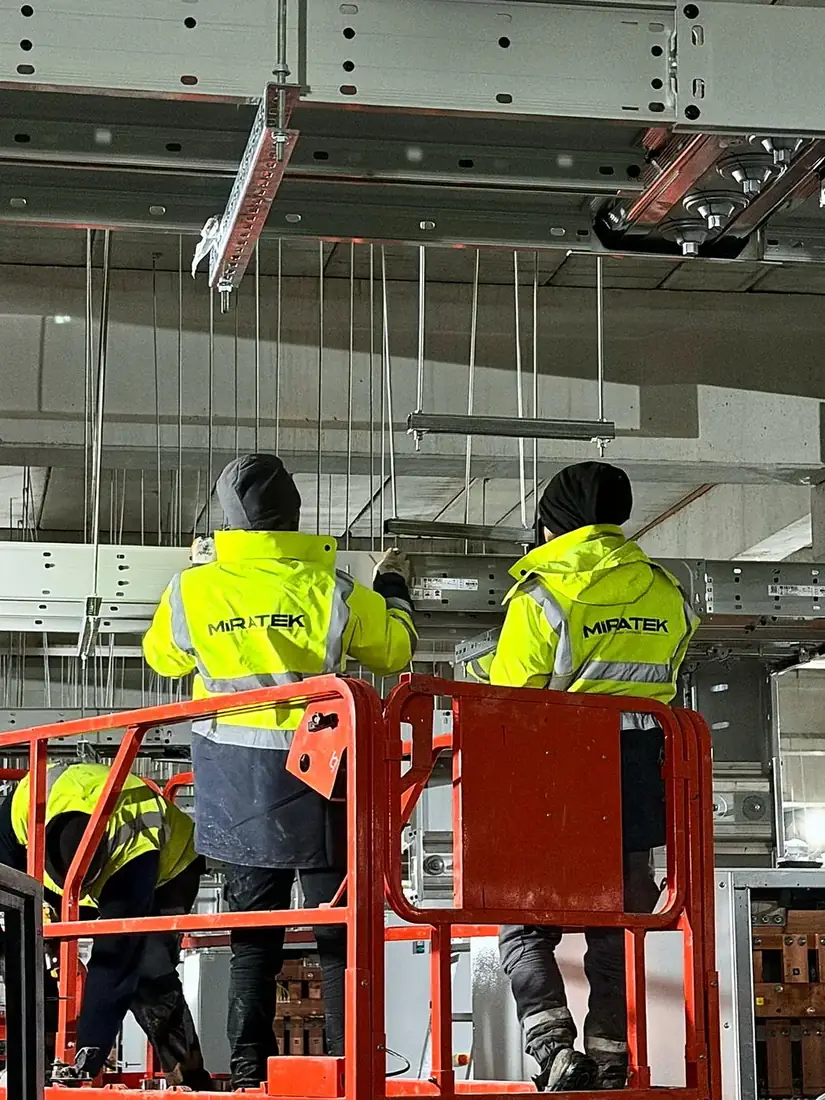
Miratek Elektrik works across Turkey as an MV electrical subcontractor on solar PV plant (SPP), BESS and wind farm sites in the 1–35 kV range, backed by more than 15 years of experience and over 1,300 completed projects. With 50 MW of installed solar PV capacity behind us and 12 active sites running in parallel, mobilizing in several regions at once is routine for our teams. Our SPP Installation and Commissioning service, together with our Technical Specifications and Project Approval and Permits consulting, gives foreign investors and EPC teams a single local technical counterpart. See our references, or contact us to discuss your project.
Frequently Asked Questions
Can a foreign EPC contractor carry out electrical works in Turkey with its own team?+
It can, but approval documents, measurement reports and the acceptance file must be signed by engineers authorised in Turkey, site staff must meet local safety and qualification rules, and DSO and TEİAŞ correspondence runs in Turkish. Most EPCs therefore keep engineering, procurement and coordination in-house and subcontract site electrical works to a local contractor.
Can IEC-certified equipment be used directly in Turkey?+
In most cases yes, because most Turkish Standards are adopted from IEC and EN. Rated voltage, frequency, short-circuit withstand and protection settings still have to be checked against the connection opinion, and conformity and test documents must be complete in the acceptance file.
When should the interface matrix be prepared?+
Before the subcontract is signed, ideally at tender stage. If terminal points and supply responsibilities are not fixed by then, missing scope and variation claims on site are almost certain.
What does Miratek do as an electrical subcontractor?+
Miratek handles MV cabling, transformer and switchgear installation, earthing, testing and commissioning on solar PV, BESS and wind farm sites across Turkey in the 1–35 kV range. A current example is the BESS electrical works we are carrying out at the Killik wind farm in Tokat.